
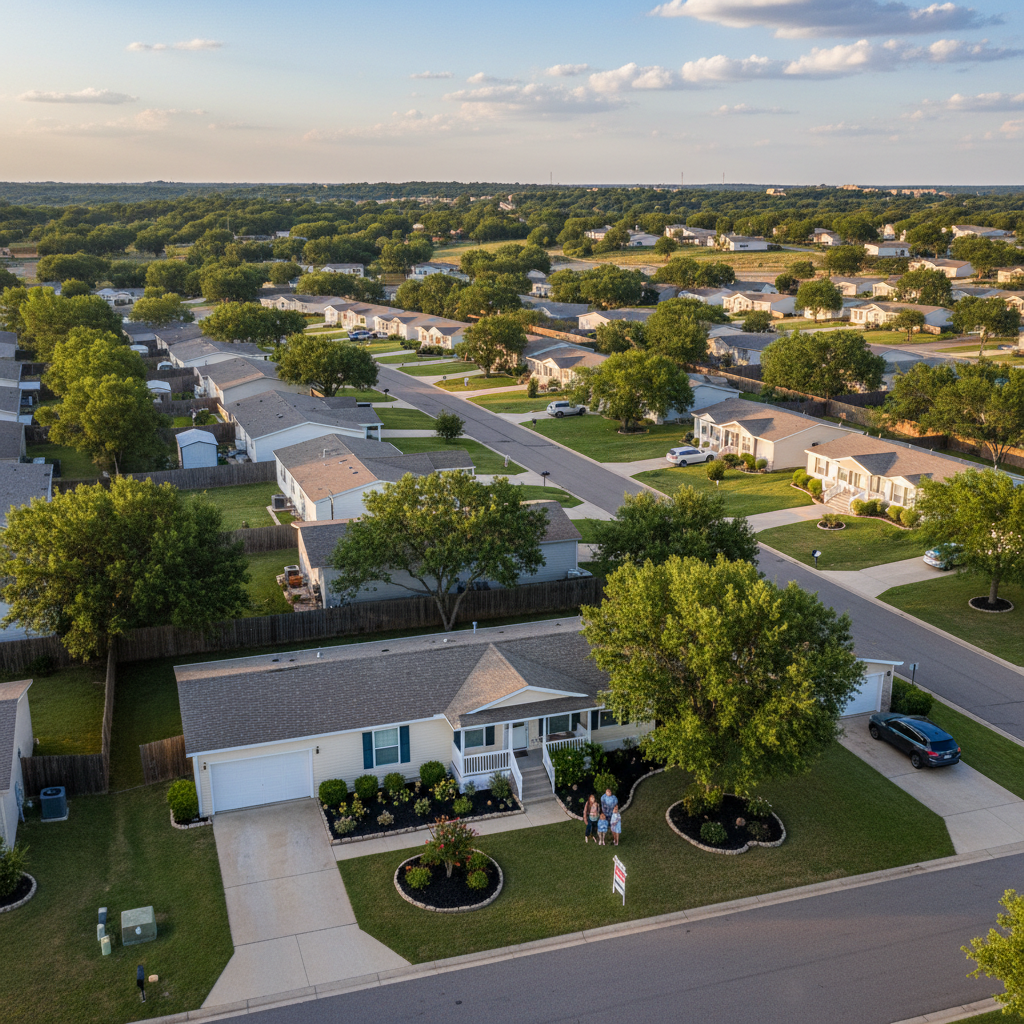
Selling a manufactured home in Texas is not the same as selling a traditional house. The title system is different, the licensing requirements are different, and the pool of qualified buyers is different. Whether your mobile home sits in a park or on private land, whether it is a 1985 single-wide or a 2022 double-wide, this guide walks you through every step of the process so you can make an informed decision and get the best possible outcome.
This guide was written by Ivan Mills, a TDHCA-licensed manufactured home broker who has helped hundreds of Texas homeowners sell their mobile homes. It reflects the current laws, market conditions, and best practices as of 2026.
The Texas Manufactured Home Market in 2026
Texas remains the largest manufactured housing market in the United States. According to the Manufactured Housing Institute, Texas consistently leads the nation in new manufactured home shipments, and the state's existing inventory of mobile homes numbers in the hundreds of thousands. That scale creates both opportunity and complexity for sellers.
Heading into 2026, several trends are shaping the market:
- Inventory remains tight for newer homes. Demand for move-in-ready manufactured homes built after 2010 continues to outpace supply, particularly in Central Texas metros like Austin, San Antonio, and Killeen. If you own a newer home in good condition, the market is working in your favor.
- Older homes face more headwinds. Pre-1995 single-wides, especially those needing significant repairs, have a smaller buyer pool. Cash buyers and investors are often the most realistic path to a sale for these homes.
- Interest rates are influencing buyer behavior. Higher conventional interest rates have pushed more buyers toward manufactured housing as an affordable alternative. However, financing for mobile homes classified as personal property remains limited, which means cash buyers and owner-financing arrangements dominate many transactions.
- Park lot rents continue rising. Monthly lot rents in many Texas mobile home parks have increased 15 to 30 percent over the past three years. Rising lot rent directly impacts what buyers are willing to pay for a home in a park, since higher monthly overhead reduces the home's perceived value.
- Corporate park ownership is growing. Large corporate operators are acquiring independently owned parks across Texas, often changing rules and increasing fees. This has motivated many homeowners to sell before conditions change further.
For a deeper look at historical market trends, read our analysis of the Texas manufactured home market in 2025.
Understanding Your Mobile Home's Value
The single most important question any seller asks is: "What is my mobile home worth?" The answer depends on several interacting factors, and understanding them will help you price your home correctly from the start.
Year and Manufacturer
Newer homes are worth more, but certain manufacturers hold their value better than others. Clayton, Champion, Fleetwood, Palm Harbor, and Cavco are among the most recognized names. A well-maintained 2015 Clayton double-wide will hold value significantly better than a lesser-known brand from the same year. Homes built before the 1976 HUD Code change are worth considerably less and can be difficult to finance or insure.
Size and Layout
Double-wides (typically 24 to 32 feet wide) command significantly higher prices than single-wides (14 to 18 feet wide). A three-bedroom, two-bathroom double-wide is the most in-demand configuration in the Texas resale market. Triple-wides exist but are rare and can be harder to sell due to their size and moving costs.
Condition
Condition is the factor you have the most control over. Buyers and appraisers evaluate the roof, flooring, plumbing, electrical, HVAC, skirting, and cosmetic appearance. A home with no deferred maintenance and updated finishes can sell for 20 to 40 percent more than a comparable home in poor condition. That said, the cost of achieving that condition matters, which we cover in the repairs section below.
Location
A mobile home in a well-maintained park in a growing metro area like Austin or San Antonio will be worth more than the same home in a rural park with limited amenities. Proximity to employment centers, schools, and shopping all factor into value.
Land vs. Park
This is the single biggest value differentiator. A manufactured home on owned land is typically worth 30 to 100 percent more than the same home sitting in a rented-lot park. Homes on land can often qualify for traditional mortgage financing, which dramatically expands the buyer pool. Homes in parks are limited to personal property transactions, which restricts financing options. For more on this distinction, see our guide on how much you can sell your mobile home for.
Using the NADA Guide
The NADA Manufactured Housing Appraisal Guide is the industry-standard valuation tool, similar to Kelley Blue Book for vehicles. It provides a baseline value based on year, manufacturer, model, size, and features. However, NADA values do not account for local market conditions, lot rent, or land value. Think of it as a starting point, not a final answer. A TDHCA-licensed broker familiar with your local market can provide a more accurate real-world valuation.
Selling Options Compared
You have several paths to selling your mobile home. Each involves different trade-offs between speed, price, effort, and risk. Here is how they compare:
| Selling Method | Timeline | Expected Price | Seller Effort | Best For |
|---|---|---|---|---|
| Cash Buyer | 7–14 days | Below retail (70–85%) | Minimal | Fast closing, as-is sales, avoiding holding costs |
| TDHCA Broker | 30–90 days | Near retail | Low to moderate | Maximizing price with professional support |
| FSBO (For Sale By Owner) | 60–180 days | Retail (if priced right) | High | Experienced sellers comfortable with paperwork |
| Traditional Realtor | 60–120 days | Varies | Low | Only if home is real property on owned land |
| Park Buyout | 14–30 days | Often below market | Minimal | When relocation is urgent and no other options exist |
Cash Buyer
Selling to a professional cash buyer is the fastest and simplest option. Companies like Mobile Bye Bye purchase manufactured homes directly, handle all the paperwork, and can close in as few as seven days. You do not need to make repairs, stage the home, or wait for buyer financing approval. The trade-off is that cash offers are typically below full retail value because the buyer is absorbing the risk, repair costs, and carrying costs.
That said, when you factor in months of lot rent, utilities, insurance, and the time value of your money, a fast cash sale often nets you more than waiting six months for a retail buyer who may or may not close. We recommend getting a cash offer first as a baseline, even if you ultimately choose a different selling method.
TDHCA-Licensed Broker
A TDHCA-licensed manufactured home broker specializes in mobile home transactions. Unlike traditional realtors, TDHCA brokers are specifically licensed to handle personal property manufactured home sales. They understand the TDHCA title system, know the market values for your specific type of home, and have access to qualified buyers. Broker commissions typically range from 6 to 10 percent, which is higher than traditional real estate commissions because the transaction values are lower and the work involved is comparable. If you want market exposure without the full commission, a flat-rate listing service lets you get on the market at a fixed cost.
For Sale By Owner (FSBO)
Selling your mobile home yourself saves on commissions but requires you to handle everything: pricing, marketing, screening buyers, negotiating, managing the TDHCA title transfer, and coordinating the closing. FSBO sales take longer on average and have a higher rate of deals falling through. For a detailed breakdown of the risks, read our article on the 5 risks of selling FSBO in Texas.
Traditional Realtor
Traditional real estate agents can only handle your sale if the mobile home has been converted to real property, meaning it is permanently affixed to land you own and an affidavit of attachment has been filed with the county. If your home is classified as personal property (the case for virtually all homes in parks), a traditional realtor is not legally qualified to broker the transaction. Learn more in our article on whether you should use a realtor to sell your mobile home.
Park Buyout
Some mobile home park managers or owners will offer to purchase your home directly. While this can be convenient, park buyouts frequently result in below-market offers. The park knows you may be under time pressure (especially if you are behind on lot rent or facing an eviction), and they have a built-in advantage because they control the lot. Always get an independent valuation and at least one competing offer before accepting a park buyout.
The TDHCA Title System Explained
Understanding the Texas manufactured home title system is essential for any seller. Unlike traditional real estate, which uses county-recorded deeds, manufactured homes in Texas use a separate title system administered by the Texas Department of Housing and Community Affairs (TDHCA).
Statement of Ownership (SOO)
The Statement of Ownership is the manufactured home equivalent of a car title. It is a document issued by TDHCA that identifies the home's owner, location, and any lienholders. When you sell your home, this document must be transferred to the new owner through TDHCA. Without a clear Statement of Ownership, you cannot legally sell your manufactured home in Texas.
Personal Property vs. Real Property
Your manufactured home is classified as one of two types:
- Personal property: The home is treated like a vehicle. It has a Statement of Ownership from TDHCA. This applies to most homes in mobile home parks and homes on land that is not owned by the homeowner. Personal property sales are governed by TDHCA rules and require a TDHCA-licensed broker or dealer.
- Real property: The home has been permanently affixed to land owned by the homeowner, and an "Application to Convert" has been filed with TDHCA. The TDHCA title is cancelled, and the home is deeded with the land through the county clerk's office, just like a traditional house. Real property sales follow standard real estate procedures.
If you are not sure how your home is classified, check whether you have a Statement of Ownership from TDHCA (personal property) or a county deed that includes the home (real property). A TDHCA-licensed broker can help you determine your classification.
The Title Transfer Process
When selling a manufactured home classified as personal property, the title transfer works as follows:
- Seller and buyer execute a purchase agreement
- Seller signs the back of the Statement of Ownership (or completes a separate transfer form)
- Both parties complete TDHCA Form T (Application for Statement of Ownership)
- The completed application, current SOO, copy of the purchase agreement, and the filing fee are submitted to TDHCA
- If there is a lien on the home, a lien release from the lender must be included
- TDHCA processes the application and issues a new Statement of Ownership to the buyer (typically 4 to 6 weeks)
Common Title Issues
Title complications are one of the biggest reasons mobile home sales stall or fall apart. The most common issues include:
- Broken ownership chain: The home was sold informally (handshake deal, bill of sale only) without completing the TDHCA transfer. The title still shows a previous owner.
- Lost Statement of Ownership: The original document is missing. You can request a duplicate from TDHCA, but it adds time to the process.
- Tax liens: Unpaid property taxes result in a lien that must be resolved before the title can transfer.
- Inherited homes: The homeowner passed away without a will, and the title was never transferred to the heirs. Probate or an affidavit of heirship may be required.
- Incorrect information: The home's location, HUD label number, or serial number on the SOO does not match reality. TDHCA requires corrections before processing a transfer.
At Mobile Bye Bye, we handle title complications regularly. Ivan Mills and our team can navigate even complex title situations and guide you through the resolution process. For more on the legal side, see our guide to the legal side of being a mobile home seller in Texas.
Step-by-Step Selling Process
Here is the typical process from deciding to sell through closing and title transfer. Timelines vary based on your chosen selling method, but the fundamental steps are the same.
Step 1: Determine Your Home's Classification and Title Status (Week 1)
Before anything else, confirm whether your home is personal property or real property, and locate your Statement of Ownership. If you cannot find your SOO, request a duplicate from TDHCA immediately, as this can take several weeks.
Step 2: Get a Baseline Valuation (Week 1)
Request a cash offer from a buyer like Mobile Bye Bye to establish your floor price. This costs you nothing and gives you a real number to compare all other options against. Also check the NADA guide and review comparable sales in your area.
Step 3: Choose Your Selling Method (Week 1–2)
Based on your timeline, financial needs, and willingness to invest effort, decide whether to sell for cash, list with a TDHCA broker, sell FSBO, or pursue another option. Review the comparison table above to weigh the trade-offs.
Step 4: Prepare the Home (Week 2–4, if applicable)
If you are listing on the market (broker or FSBO), invest in cost-effective preparation. At minimum: deep clean the interior and exterior, remove personal items and clutter, ensure all utilities are functional, and address any safety issues. If selling as-is to a cash buyer, this step is unnecessary.
Step 5: Market the Home (Week 2–12, if listing)
For FSBO sellers, this means posting on Facebook Marketplace, Craigslist, MHVillage, and local mobile home groups. Take quality photos in good lighting. Write an honest, detailed description that includes the year, manufacturer, size, number of bedrooms and bathrooms, and any upgrades. For broker-listed homes, your broker handles this.
Step 6: Negotiate and Accept an Offer (Varies)
Review all offers carefully. Consider not just the price but also the buyer's ability to close (cash vs. financing), the proposed timeline, and any contingencies. A slightly lower cash offer that closes in two weeks may net you more than a higher offer from a buyer who needs 60 days and financing approval.
Step 7: Execute the Purchase Agreement (1–3 days)
Once you agree on terms, both parties sign a purchase agreement that spells out the price, closing date, any contingencies, what is included in the sale (appliances, fixtures, etc.), and how the title transfer will be handled.
Step 8: Close and Transfer Title (1–6 weeks)
At closing, the buyer pays the agreed price, you sign over the Statement of Ownership, and all TDHCA paperwork is submitted. If there is a lienholder, the lien must be satisfied and a release obtained. The TDHCA then issues a new Statement of Ownership to the buyer, which typically takes 4 to 6 weeks after submission.
Step 9: Vacate and Hand Over (Per agreement)
Move out by the agreed-upon date, leave the home in the condition specified in the purchase agreement (broom-clean is standard), and hand over all keys, remotes, and access information.
Selling a Mobile Home in a Park
The majority of mobile home sales in Texas involve homes located in mobile home parks (also called manufactured home communities). Selling from a park introduces several unique considerations that do not apply to homes on private land.
Park Approval
Most parks require management approval before a new resident can move in. This means your buyer needs to pass the park's screening process, which typically includes a credit check, background check, income verification, and sometimes references. If your buyer does not pass, the sale falls through. When evaluating offers, ask whether the buyer has already spoken with park management.
Lease Transfer
When you sell a home in a park, the buyer takes over a new lot lease with the park. They do not assume your existing lease. Be aware of the current lot rent and any recent or planned increases, as this directly affects what buyers will pay for your home. Parks with lot rents exceeding $600 to $700 per month in Texas are seeing buyer resistance, which suppresses home values.
Right of First Refusal
Some park leases include a right of first refusal clause, giving the park the option to match any offer you receive and purchase the home themselves. Check your lease carefully. If your park has this clause, you must present any accepted offer to management before finalizing the sale.
Park Rules and Restrictions
Parks may restrict things like the age of homes allowed (some parks do not permit homes older than 15 or 20 years), exterior modifications, pets, and occupancy limits. These rules affect your buyer pool. Make sure potential buyers are aware of all park rules before they make an offer.
For a comprehensive walkthrough of park-specific concerns, read our dedicated guide on how to sell a mobile home in a park the right way.
Selling a Mobile Home on Private Land
If your manufactured home sits on land you own, you are in a significantly stronger position. Homes on private land typically sell for more, attract more buyers, and qualify for better financing. But the process is also more complex because you are dealing with both the home and the land.
Selling Home and Land Together
If the home has been converted to real property (permanently affixed with an affidavit of attachment filed), you can sell the home and land together using a traditional real estate transaction with a title company, deed, and conventional financing. This is the simplest and most lucrative approach. A traditional real estate agent can handle this type of sale.
Selling Home and Land Separately
If the home is still classified as personal property sitting on land you own, you can sell them separately. The land transfers via a deed through the county, and the home transfers via the TDHCA Statement of Ownership. This adds complexity and usually requires a buyer willing to navigate two separate transactions. In most cases, converting the home to real property before selling (if feasible) is the better strategy.
Selling Only the Home (Keeping the Land)
You can sell just the mobile home and keep your land. The buyer would need to move the home to a different location. This is common with older homes where the land value far exceeds the home value. The buyer pays for the move, but you should account for site restoration costs (removing the foundation, skirting, utility connections, and any debris). For logistics on this option, see our guide on selling a mobile home that needs to be moved.
Land Considerations
When the sale includes land, additional factors come into play: property survey requirements, well and septic system inspections, flood zone designations, deed restrictions, easements, and property tax prorations. A title company or real estate attorney should be involved to handle these elements properly.
Repairs: Fix or Sell As-Is?
This is one of the most common dilemmas sellers face, and the answer is almost always more nuanced than "always fix" or "never fix." The right decision depends on the math.
Repairs That Typically Pay for Themselves
- Roof repair or re-coating: $500 to $2,000 cost, can increase value by $2,000 to $5,000 because a bad roof is the number-one dealbreaker for buyers
- Interior paint: $200 to $800 DIY, can increase perceived value by $1,000 to $3,000. Neutral colors (gray, beige, white) work best
- Flooring replacement: $500 to $2,500 for vinyl plank, can increase value by $1,500 to $4,000
- Deep cleaning and decluttering: $100 to $300, makes the home show dramatically better
- Functional plumbing and electrical fixes: Variable cost, but non-functional systems eliminate most buyers
Repairs That Rarely Pay for Themselves
- Full kitchen or bathroom remodel: $5,000 to $15,000 cost, rarely recovers more than 50 percent in a manufactured home sale
- Major structural repair: $3,000 to $10,000+, often signals to buyers that more problems may be hidden
- New HVAC system: $3,000 to $7,000, only adds $1,500 to $3,000 in resale value for most mobile homes
- High-end upgrades: Granite countertops, custom cabinetry, and premium fixtures in a mobile home rarely return their cost
The As-Is Calculation
Here is the framework we recommend: Get an as-is cash offer first. Then estimate the cost of repairs and the projected selling price after repairs. Subtract the repair costs, the additional months of holding costs (lot rent, utilities, insurance), and any broker commissions from the projected selling price. Compare that net number to the cash offer. If the difference is less than $3,000, selling as-is is almost always the smarter move when you factor in the time, stress, and risk of deals falling through.
For a checklist of what to focus on if you do decide to prepare your home, read 5 things to do before putting your mobile home on the market.
Tax Implications of Selling a Mobile Home in Texas
Texas has no state income tax, which simplifies the tax picture for sellers. However, federal taxes and local property taxes still apply.
Capital Gains Tax
Whether you owe capital gains tax depends on your home's classification and whether it appreciated in value:
- Personal property (most park homes): Manufactured homes classified as personal property typically depreciate over time, similar to vehicles. If you sell for less than your original purchase price (which is common), there is no capital gains tax because there is no gain. If you made significant improvements and sell for more than your adjusted cost basis, you could owe capital gains tax.
- Real property (home on owned land): If your manufactured home is classified as real property and sold with the land, standard real property capital gains rules apply. The primary residence exclusion under IRS Section 121 may shield up to $250,000 in gains for single filers or $500,000 for married filers filing jointly, provided you lived in the home for at least two of the last five years.
Property Tax
In Texas, property tax on manufactured homes depends on classification. Real property homes are taxed through the county appraisal district like any other real estate. Personal property homes may be subject to either a county property tax or an annual registration fee paid to the Texas Department of Housing and Community Affairs, depending on how the home is registered. When selling, property taxes are typically prorated between buyer and seller as of the closing date.
Sales Tax
Texas does not charge sales tax on the resale of a manufactured home between private parties. However, the initial retail purchase of a new manufactured home from a dealer is subject to a 5 percent sales tax. This does not apply to your resale transaction, but it is worth understanding for context.
We are not tax professionals, and this section is for informational purposes only. Consult a qualified tax advisor for guidance specific to your situation.
10 Common Mistakes Mobile Home Sellers Make
After years of working with mobile home sellers across Texas, Ivan Mills and the Mobile Bye Bye team have seen the same mistakes repeat. Here are the ten most costly ones and how to avoid them.
- Overpricing based on emotion. Your home is worth what the market will pay, not what you put into it or what it means to you. Price based on comparable sales and NADA values, not sentiment. Overpriced homes sit on the market, accumulate holding costs, and eventually sell for less than if they had been priced correctly from the start.
- Ignoring the title situation until a buyer appears. Title issues can take weeks or months to resolve. If you wait until you have a buyer, they may walk away while you sort things out. Check your Statement of Ownership and resolve any issues before listing.
- Using a traditional realtor for a personal property sale. Traditional realtors are not licensed to broker personal property manufactured home sales in Texas. At best, they will be unfamiliar with the process. At worst, the transaction will not be legally valid. Use a TDHCA-licensed broker.
- Not factoring in holding costs. Every month your home sits unsold, you are paying lot rent ($400 to $800+), utilities ($100 to $250), and insurance ($50 to $100). Over six months, that is $3,300 to $6,900 in costs that come directly out of your net proceeds. Factor these into your pricing and selling strategy.
- Accepting a park buyout without shopping around. Park managers who offer to buy your home often start with a lowball offer. They know you may be under pressure. Always get at least two competing offers before accepting any deal.
- Making expensive repairs without calculating ROI. Not all repairs increase your selling price enough to justify their cost. Get an as-is offer first, then decide whether repairs make financial sense.
- Failing to disclose known defects. Texas law requires sellers to disclose known material defects. Hiding problems does not make them go away. It creates legal liability and can unwind a sale after closing. Be upfront about the condition of your home.
- Signing documents you do not understand. The TDHCA title transfer involves specific forms and legal obligations. Do not sign anything you have not read and understood. If you are selling FSBO, consider having a manufactured housing attorney review your paperwork.
- Selling to the first person who shows interest. Urgency can lead to bad deals. Unless you are in a genuine emergency, take the time to evaluate multiple offers and choose the one that best fits your needs.
- Forgetting about the lot lease. If your home is in a park, the buyer's ability to close depends on park approval. Some sellers accept an offer, start making plans, and then discover the buyer cannot get approved. Verify park approval early in the process.
Frequently Asked Questions
How long does it take to sell a mobile home in Texas?
It depends on your selling method. Selling to a cash buyer like Mobile Bye Bye can close in as few as 7 to 14 days. Listing with a TDHCA broker typically takes 30 to 90 days. Selling FSBO (For Sale By Owner) averages 60 to 180 days depending on pricing, condition, and location. The TDHCA title transfer itself usually takes 4 to 6 weeks after closing.
Do I need a title to sell my mobile home in Texas?
Yes. In Texas, manufactured homes use a Statement of Ownership (SOO) issued by the Texas Department of Housing and Community Affairs (TDHCA). If you have lost your SOO, you can apply for a duplicate through TDHCA. If the title was never properly transferred to your name, you will need to resolve the ownership chain before selling. A TDHCA-licensed broker can help navigate these situations.
Can I sell a mobile home that is in a park?
Yes, you can sell a mobile home located in a mobile home park. However, you are selling the home only, not the land. The buyer will need to be approved by the park management and agree to the park's lease terms. Some parks have right of first refusal clauses, meaning the park can match any offer you receive. Always review your lease agreement before listing.
How much is my mobile home worth?
Mobile home values depend on the year, manufacturer, size (single-wide vs. double-wide), condition, location, and whether the home sits on owned land or in a park. The NADA Manufactured Housing Appraisal Guide provides baseline values. Homes on private land are typically worth more than identical homes in parks. A TDHCA-licensed broker can provide a market-based valuation specific to your area.
Do I have to pay taxes when I sell my mobile home?
If your mobile home is classified as personal property, there is typically no capital gains tax since manufactured homes generally depreciate rather than appreciate. If your home is classified as real property (attached to land you own), standard real property capital gains rules apply. Texas has no state income tax, but federal capital gains tax may apply if you sell for more than your adjusted cost basis. The primary residence exclusion may shelter up to $250,000 in gains for single filers or $500,000 for married filers.
What is the difference between a mobile home and a manufactured home?
The terms are used interchangeably in everyday conversation, but there is a technical distinction. Homes built before June 15, 1976 are officially called "mobile homes." Homes built after that date must comply with the HUD Code and are technically called "manufactured homes." For selling purposes in Texas, the TDHCA title and transfer process is the same regardless of when the home was built.
Should I fix up my mobile home before selling it?
Not always. Some repairs offer strong return on investment, like fixing leaky roofs, replacing damaged flooring, and refreshing paint. Major structural repairs or full renovations rarely pay for themselves in resale value. The best approach is to get an as-is cash offer first, then compare it against the estimated cost of repairs plus the projected higher selling price. If the math does not work in your favor, selling as-is is the smarter move.
Can a real estate agent sell my mobile home?
A traditional real estate agent can only sell your mobile home if it has been converted to real property (permanently attached to land you own with an affidavit of attachment filed). If your home is classified as personal property, which is the case for most mobile homes in parks, you need a TDHCA-licensed manufactured home broker. Regular real estate agents are not licensed to handle personal property manufactured home transactions in Texas.
What happens to my mobile home if I stop paying lot rent?
If you stop paying lot rent in a Texas mobile home park, the park can begin eviction proceedings. Under Texas Property Code Chapter 94, the park must provide written notice and follow specific timelines. If you are evicted, you typically have a limited window to remove your home. If you do not remove it, the park may eventually claim a lien on it. If you are behind on lot rent and considering selling, a fast cash sale can help you avoid eviction and recover some equity. Learn more in our guide on how to fight eviction in a Texas mobile home community.
How do I transfer a mobile home title in Texas?
To transfer a mobile home title in Texas, the seller and buyer must complete TDHCA Form T (Application for Statement of Ownership). Both parties sign the form, and it is submitted to TDHCA along with the current Statement of Ownership, a copy of the sales agreement, and a filing fee. Processing typically takes 4 to 6 weeks. If there is a lien on the home, you will also need a lien release from the lender. A TDHCA-licensed broker handles this entire process as part of the transaction.
Whether you sell for cash, list with a broker, or go the FSBO route, the key is making an informed decision based on your specific situation. If you want to talk through your options with someone who knows the Texas manufactured home market inside and out, call Ivan Mills at 737-214-0172. No pressure, no obligation, just honest advice.